
ABOUT DIAMONDS IN GENERAL
THE QULAFICITATION
THE CARAT WEIGHT
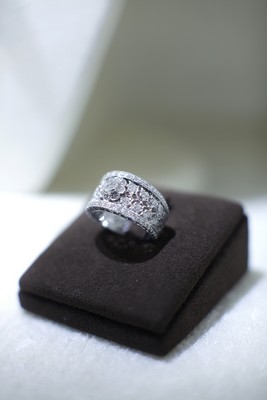
The carat is such a unit, that refers to the weight of the diamond: 1,0 carat is equal to 0,20 gramms.
THE CUT
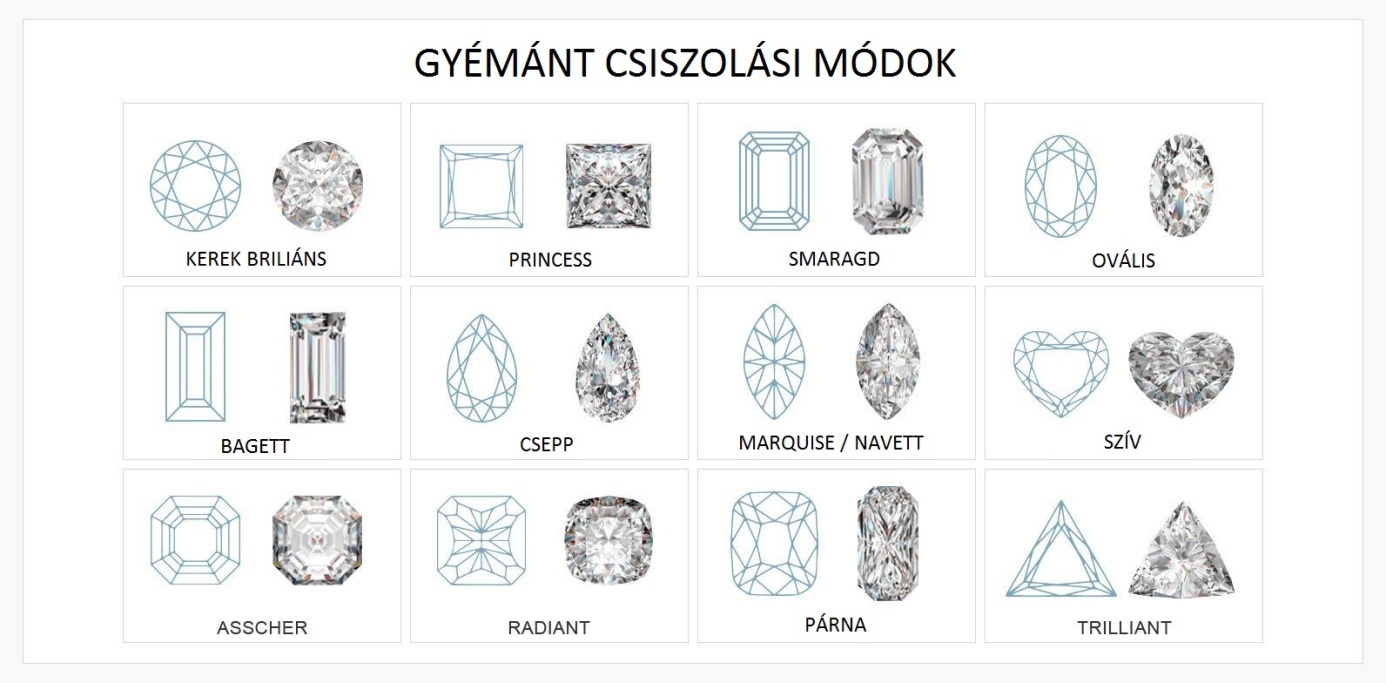
Polishing and cutting of the diamonds gradually increase the values of the stone. Cutting contains the quality as well as the methods. There is a difference between old and modern cutting. Mostly antique jewelery pieces contain old cut diamonds of which value is lower than modern cut pieces. We are aware of several cutting methods, however the most popular is the brilliant cut.
The further chart contains the most popular and, widely known cutting methods.
THE COLOUR
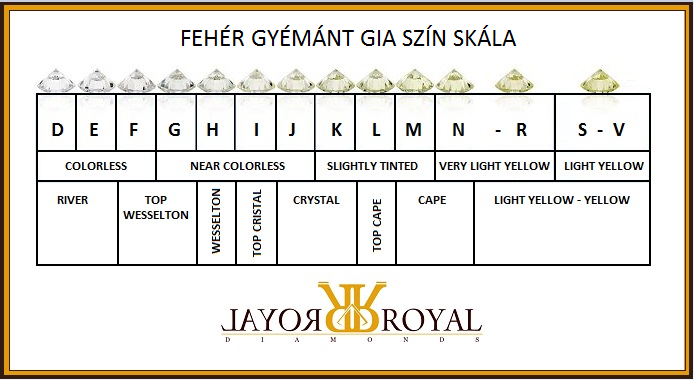
The colour of the diamond refers to such a scale, which defines how colorless the diamond is. The real white colour is considered the best and the most valuable as it contains less discolourations. The more discolourations one stone has the color tends to be more gray and yellowish. This is the consequence of natural pollutions included in the stone in the course of several million years. Therefore an interesting caracter of the gemstones is the level of pollution and inclusions occurred in the diamond resulting in extremely rare colours. It may happen that some highly “polluted” vivid colour stones can be more valuable than white diamonds. The most beautifull and most valuable pieces tend to blueish colours in spite of the avilibility of sevelar colourful diamonds the most popular and sought after pieces are white diamonds.
THE QUALITY
Every diamond is different and unique. The quality of the diamond can be influenced by several internal, external factors. External factors contain surface deffaults like crashes, wholes, cutting tracks. Internal deffaults contain different kinds of inclusions like dark, black incluslions or white inclusions such as marks. The quantity, size and the loccation of inclusions may influence the quality of the stone, therefore its price. The less inclusions and deffaults the stone has got, the higher value it represents. The quality of the diamonds is examined under microscope, consequently some deffaults can not be noticed only by special equipment. The following chart contains of such deffaults that can be noticed without special equipment.
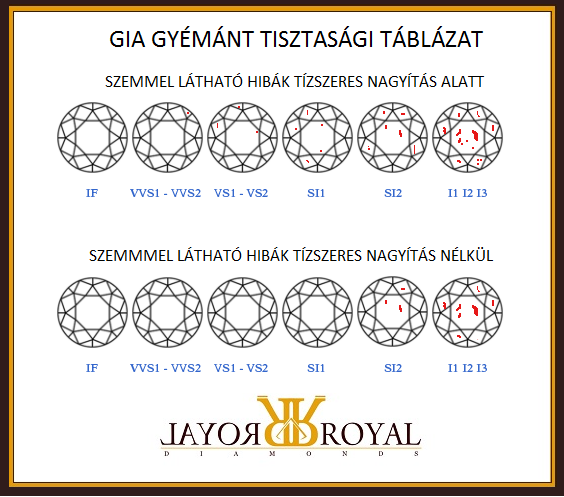
| FL | FLAWLESS | TELJESEN HIBÁTLAN, ZÁRVÁNY MENTES NAGYON RITKA 1 AZ 5000-BŐL |
| IF | INTERNALLY FLAWLESS | TELJESEN ZÁRVÁNY MENTES, CSAK PICI FOLTOK FORDULNAK ELŐ, AZ ÉKSZERGYÉMÁNTOK MINTEGY 3% ÉRI CSAK EL EZT A MINŐSÍTÉST. |
| VVSI1 | VERY VERY SLIGHTLY INCLUDED 1 | NEHEZEN ÉSZREVEHETŐ PICI ZÁRVÁNYOK VAGY HIBÁK A KŐ KÖZEPE FELÉ |
| VVSI2 | VERY VERY SLIGHTLY INCLUDED 2 | NEHEZEN ÉSZREVEHETŐ PICI ZÁRVÁNYOK VAGY HIBÁK A KŐ KÖZEPE FELÉ |
| VSI1 | VERY SLIGHTLY INCLUDED 1 | PICI ZÁRVÁNYOK VAGY HIBÁK LÁTHATÓAK TÍZSZERES NAGYÍTÁS ALATT A KŐ SZÉLEI FELÉ |
| VSI2 | VERY SLIGHTLY INCLUDED 2 | PICI ZÁRVÁNYOK VAGY HIBÁK LÁTHATÓAK TÍZSZERES NAGYÍTÁS ALATT A KŐ SZÉLEI FELÉ |
| SI1 | SLIGHTLY INCLUDED 1 | PICI ZÁRVÁNYOK VAGY HIBÁK AMIK MÉG NEM LÁTHATÓAK SZABADSZEMMEL |
| SI2 | SLIGHTLY INCLUDED 2 | ERŐS FIGYELEM MELLETT MÁR SZABADSZEMMEL LÁTHATÓ ZÁRVÁNYOK VAGY HIBÁK |
| I1 | INCLUDED 1 | SZABADSZEMMEL LÁTHATÓ ZÁRVÁNYOK ÉS HIBÁK |
| I2 | INCLUDED 2 | SZABADSZEMMEL LÁTHATÓ NAGYOBB HIBÁK ÉS ZÁRVÁNYOK |
| I3 | INCLUDED 3 | SZABADSZEMMEL LÁTHATÓAN NAGYON ZÁRVÁNYOS ÉS HIBÁS |